
Solar Powered Auto-Darkening Welding Helmet (Mask)
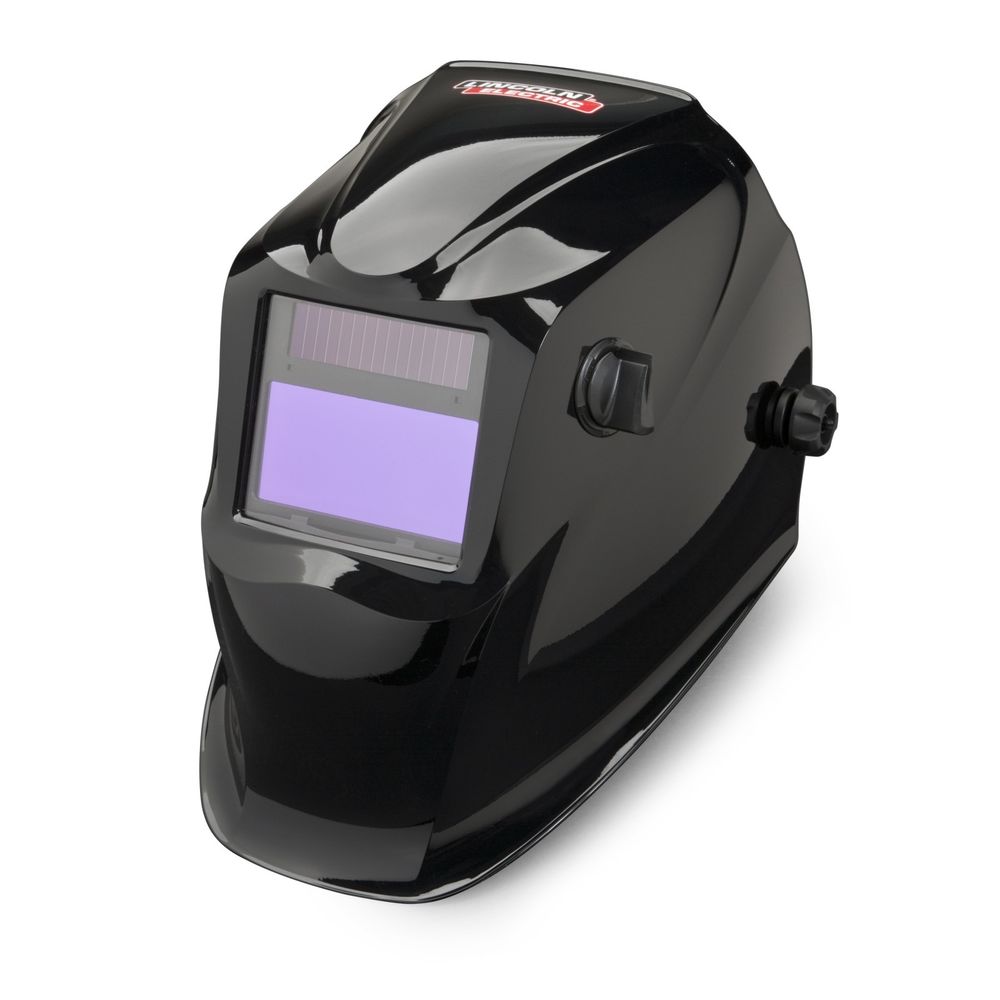
R255
INCLUDING VAT • ITEM NO: WH01
Bulk order discount: R215 each for 5+ units (excl VAT)
✓ Stock Available
|
Product Specifications
Key Features
|
|
ICM Industries Address: Directions: Search for "ICM Industries" on Google Maps |
Telephone: Email: Website: Order Note: Please email for bulk orders (5+ units) at discounted rate of R215 excl VAT each. |
Complete Welding Helmet Buying Guide
Why Invest in a Quality Welding Helmet?
On the job or in the garage, every welder needs protection to prevent eye damage. As a general rule, spending more on a welding helmet will increase comfort, improve your welding ability, result in higher quality welds and ensure your safety.
Auto-Darkening vs Standard Glass Lens
Standard — or passive — welding helmets provide basic protection at budget prices. These helmets have a special piece of dark tinted glass, most often with a #10 shade and ultraviolet (UV) and infrared (IR) coatings.
However, standard helmets have disadvantages: difficulty keeping the gun/torch in position, limited space in restricted areas, neck discomfort from repetitive flipping, and inefficiency during tack welding.
Auto-darkening welding helmets resolve all these problems. Instead of standard tinted glass, they feature an electronic filter lens with adjustable settings. The auto-darkening filter (ADF) uses liquid crystal display (LCD) technology, similar to digital alarm clocks.
Fixed vs Variable Shade Lenses
If you primarily weld one material type and thickness using the same process and amperage, a fixed shade #10 lens may suffice. However, most welders work with different materials (mild steel, stainless steel, aluminum) and various thicknesses requiring different processes (stick, MIG, TIG) and amperages (40-200+ amps).
For varying brightness levels, you need an adjustable or variable shade lens. Most variable shade lenses adjust from shade #9 through #12 or #13, providing proper eye protection and optimal weld puddle visibility across different applications.
Switching Speed (Lens Reaction Time)
Switching speed indicates how fast the lens transitions from its natural light state (usually shade #3 or #4) to the darkened shade when welding begins. Faster switching speeds (as high as 1/16,000 second) provide better comfort and prevent arc flash symptoms.
Solar Power and Battery Life
Our welding helmet features both solar assist and replaceable AAA batteries, allowing immediate use without charging periods. The combination provides approximately 5,000 welding hours of operation, with economical battery replacement options available everywhere.
Adjustable Sensitivity and Delay Controls
Sensitivity control is essential when welding at low amperages, particularly with TIG welding where the arc isn't as bright. Delay control lets you set how long the lens stays dark after the welding arc stops - shorter delays for efficient tack welding, longer delays for high-amperage welding to prevent after-image viewing.
Professional Benefits: Auto-darkening helmets enable precise weld joint setup with the hood in position, eliminate head-snap movements, prevent sloppy starts due to torch movement, and provide consistent protection throughout the welding process.
ICM Industries • Quality Welding Equipment Since 2005 • Suppliers to South Africa's Welding Industry
www.icmsa.co.za • icm@lantic.net • Tel: 011-312 3393 / 060 610 7549
